
1983 Westone Thunder 1A
Westone, my favourite of the old Matusmoku brands out of Japan. Here I’ll be talking about one my favourite guitars and brands - a player-first, forward-thinking company offering more features and tones than almost any other manufacturer. Get a cup of tea and strap in, it’s going to get pedantic.
Preamble:
Originally established as a furniture workshop in 1951, Matsumoku pivoted into guitar building in/around 1961. Between that time and their closure in 1987 they produced a huge amount of guitars for other brands such as Vantage, Quest, Aria Pro II, Skylark, Washburn, Epiphone, Electra, and probably many others I don’t know about. There is a rumour/urban legend that the Matsumoku factory burned down in some horrific inferno during 1987 which led to the demise of the factory and its brands, effectively ending their presence in Japan. The truth seems to be much more mundane: sales dried up, the factory closed, and (some of) the brands were sold to other companies - hence why we have Westones being made in Korea, and Aria Pro II being bought and sold a whole bunch of times since 1987 and are still being produced now out of Indonesia and/or China. Many of the other in-house brands have simply ceased to exist and are only available on the used market where people in the know covet them, but they never seem to fetch the prices their quality deserves (with very few exceptions such as the Aria Pro II TS800 for example). This means you can buy a high-quality, beautiful, quirky, Made in Japan instrument for less than, say, a used Squier (at time of writing).
Being a lefty it can be slim pickings out there but Matsumoku made a few of their models in l/h. I imported this 1983 Westone Thunder 1A from Glasgow sometime in 2023 (thanks, Gumtree). It was shipped disassembled, something I greatly appreciate to cut down the costs of shipping.
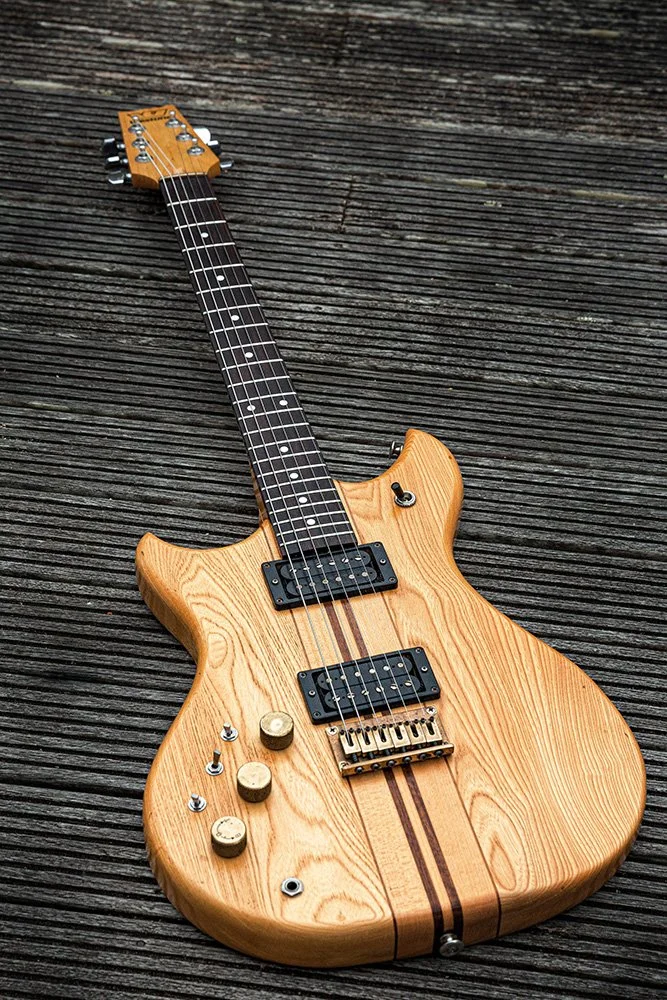
You can see here the sandwich construction of the body: there’s a central block made of Maple and Mahogany, with 2 Sen (Japanese ash) wings on the side. Despite looking like a neck-through from the front it’s your regular bolt-on arrangement.
There were 3 core models in the Thunder series, here’s a very basic breakdown:
Thunder 1: Bolt on neck
Thunder 2: Set neck
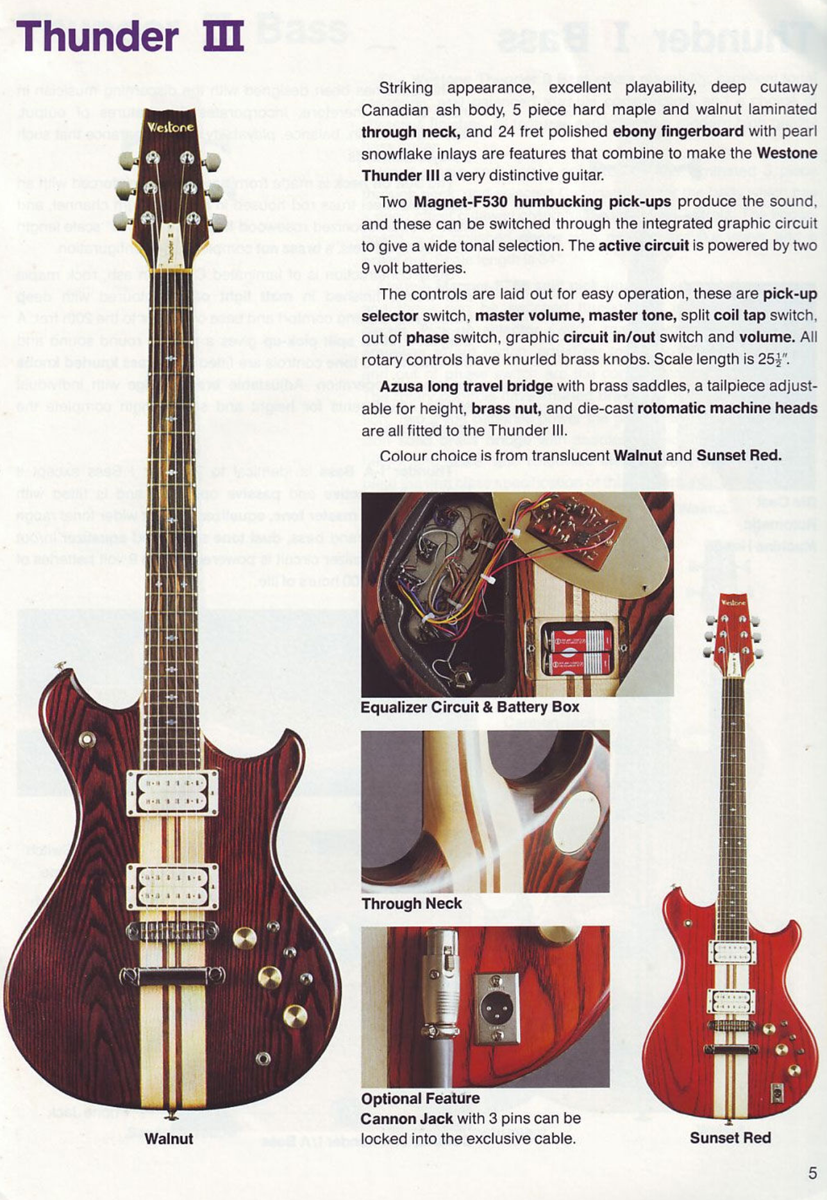
Thunder 3: Neck through (custom order only, beautiful things)
There are pickup and hardware differences but they’re the big fundamental differences.
You can see the full 1983 catalogue here: https://westoneguitars.net/scans-1/catalogues-price-lists/1983-catalogue-uk-price-list/ but the Thunder 3 was changed to a much less attractive model than it’s earlier counterpart, which is one of the most beautiful guitars I’ve ever seen.
The logo changed sometime during 1983, I think around June. You can make out the older cartoony ‘Pink Panther’ style logo on the pic above, and they changed it to the ‘bird’ design below, which I affectionately call the rubber duck. It’s more modern, cooler, and incorporates a creative use of a stylised W rather than just text, which does not a logo make. The bird logo lasted beyond the brand’s departure from Japan.
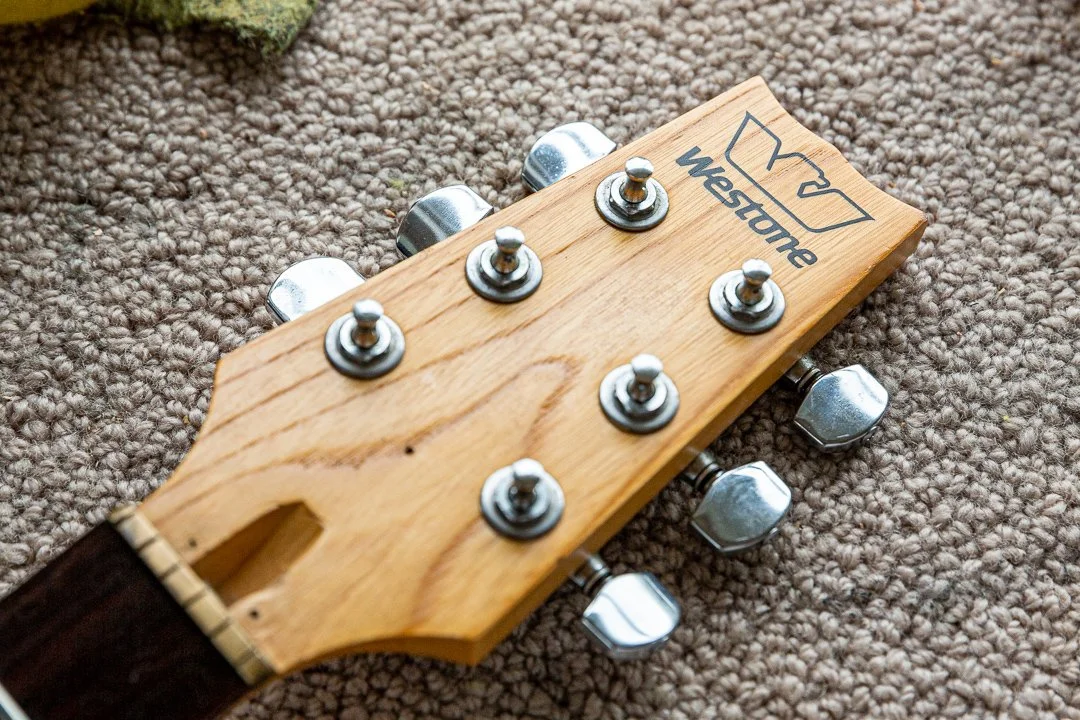
The rubber duck logo, 1983.
Serial Numbers:
The way to decipher the serials of Matsumoku Japan products is pleasingly logical.
7 digits in the YMMXXXX format which is deciphered as Year, Month Month, Production Number.
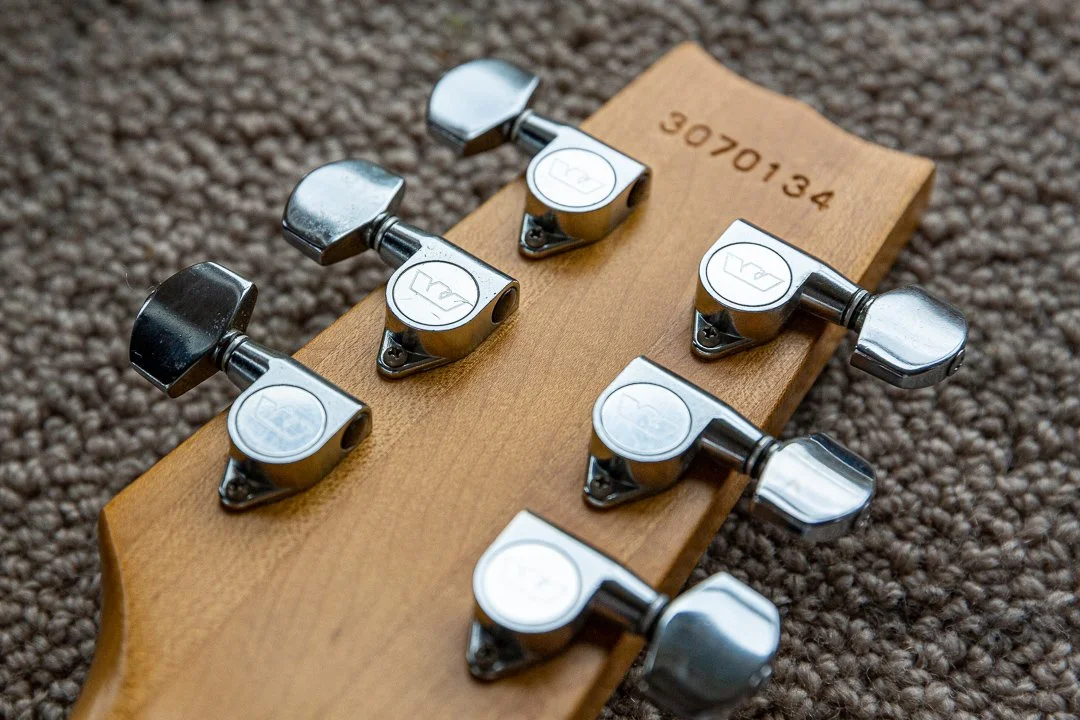
The engraved serial and Gotoh-made (but Westone branded) tuners.
In this case the 3070134 means 1983, July (the 7th month), and the 134th guitar produced.
If yours was (for example) 5118888 that would be 1985, November, 8888th guitar produced.
That picture leads me to another great bonus of these guitars: the 3 piece neck (5 if you count the veneers between the pieces) made of maple. Having a multi-piece neck manufactured in this fashion makes a much stronger and stiffer neck than a single piece of timber that, when laminated to the fingerboard which sits laterally across the structure, is very resistant to twists and changes wrought by humidity changes. As you can imagine this method of construction takes more time and care to produce en masse but that’s Matsumoku - they gave a shit.
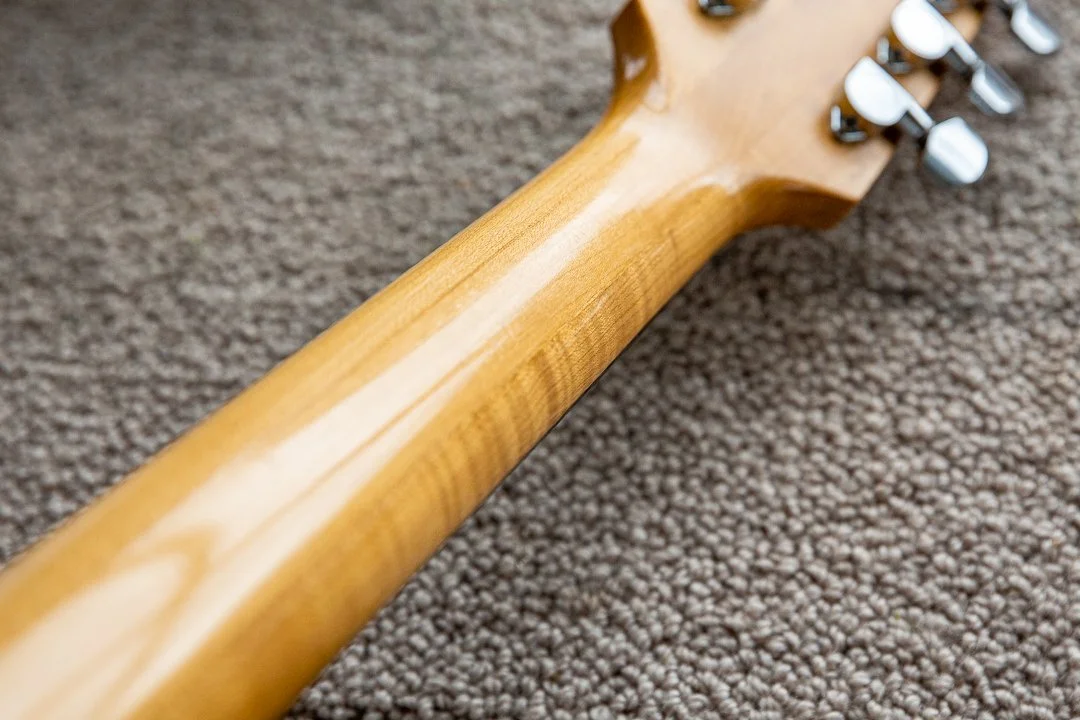
neck laminations with even a bit of figuring in there
Moving on.
The fingerboards used were a nicely dark piece of Indian rosewood, 24.75” scale, 12” radius, medium jumbo frets, basic dots as inlays, 5mm truss rod adjustment at the headstock. Very much like a Gibson-style neck but a little thinner like a shallow C profile similar to a 90s strat. It’s very comfortable but if you like a bigger neck you might find it a little skinny.
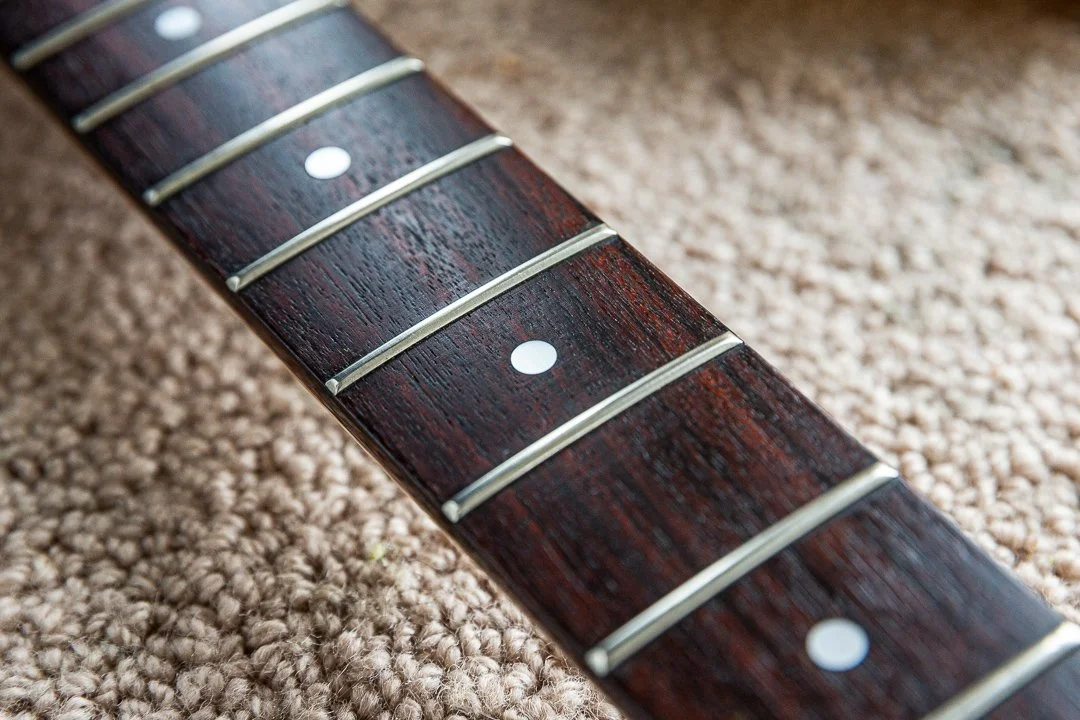
Frets leveled, crowned, polished. Board stripped of finger cheese and oiled.
I mentioned up above that there’s some quirks in these guitars. When I say “quirks” I really mean features that Matsumoku insisted on including, even if it was cutting into their margin. Remember, at the time these weren’t very expensive guitars, retailing for £159.95 in 1983 as you can see on the official price list here (at the bottom): https://westoneguitars.net/scans-1/catalogues-price-lists/1983-catalogue-uk-price-list/ but the designers insisted on using bespoke hardware (a lot of it solid brass) made by Gotoh, incorporating on-board active controls, switching options for phase-reversal and coil-tapping, as well as the usual volume and tone controls.
All these design choices resulted in a very versatile guitar with a boatload of tones on hand in a lightweight and compact package (this one is around 3.4kg).
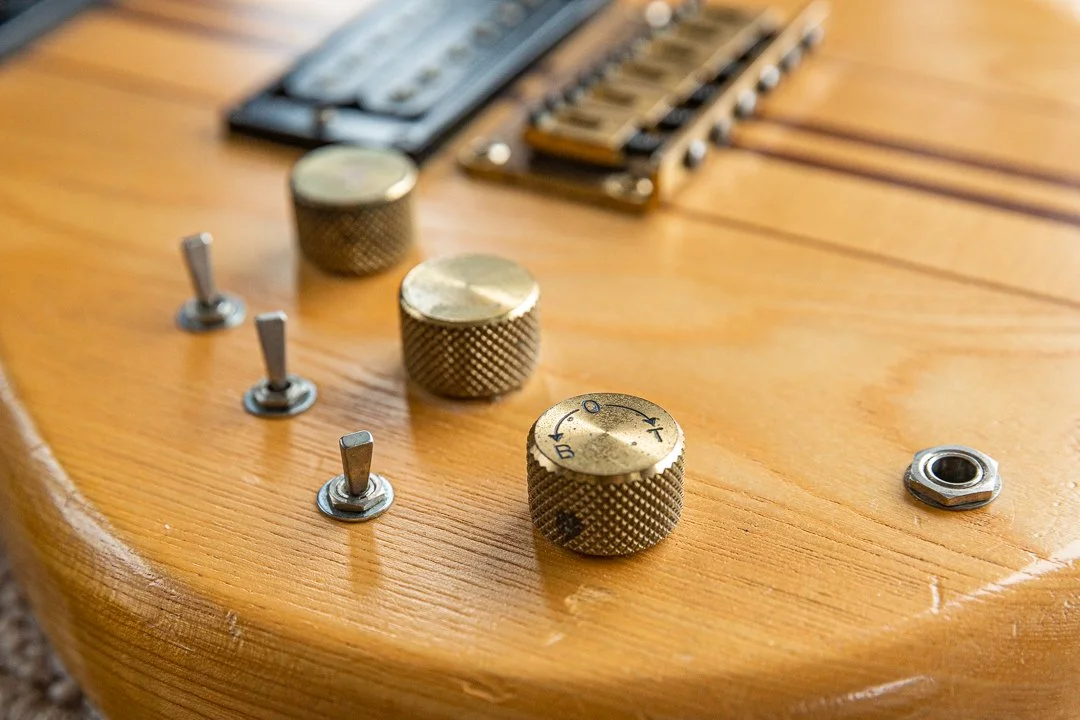
Solid brass knurled knobs and 3x mini switches on board. The knobs (top to bottom) are master volume, master tone, tilt EQ control for the boost circuit.
The switches (top to bottom) are: coil splitting, phase-reversal (for middle position), and boost on/off. Note the brass bridge in the background.
Around the back was the control cavity, and a compartment for the 2x 9v batteries needed to power the boost module - this adds a gain boost of ~15db and the knob is either a bass boost/treble cut or vice versa. It’s like having a boost pedal right in your guitar and works great when playing through an amp’s dirty channel for a bit more chug.
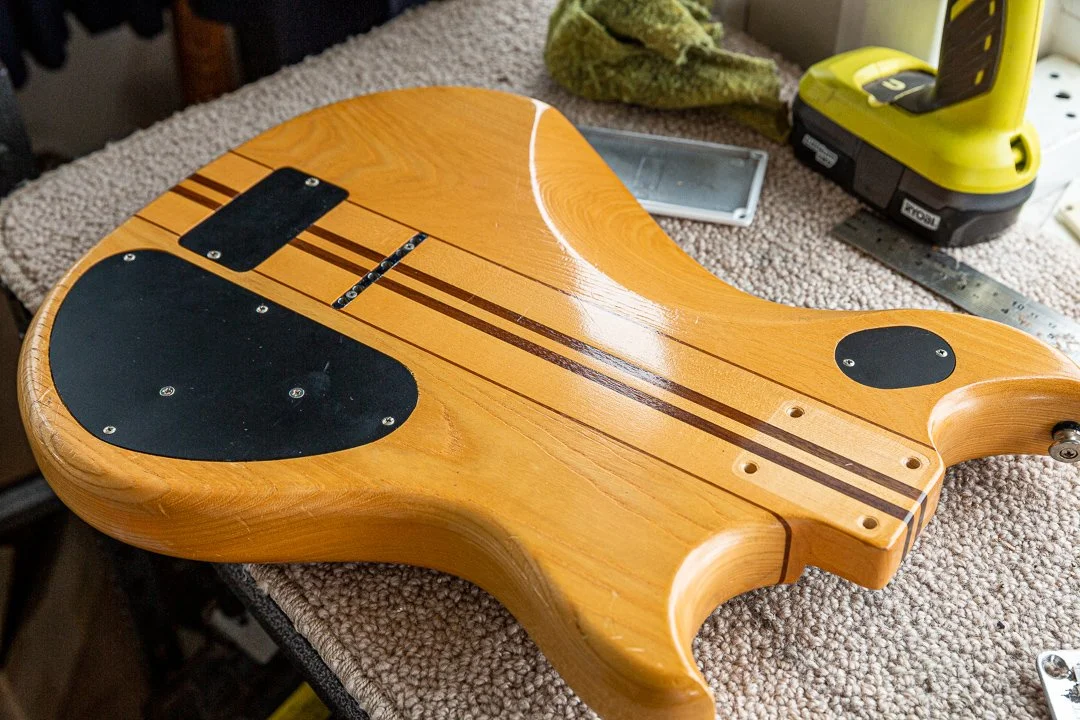
The battery cover is behind the string retainer (much better than the ferrules still used by Fender), the big cover is for the main electronics cavity.
Now it all gets a bit mad.
You see the larger control cover above? It has 4 screws to secure it to the body as normal. But those 2 screws on the inside of the cavity hold the PCB for the boost module.
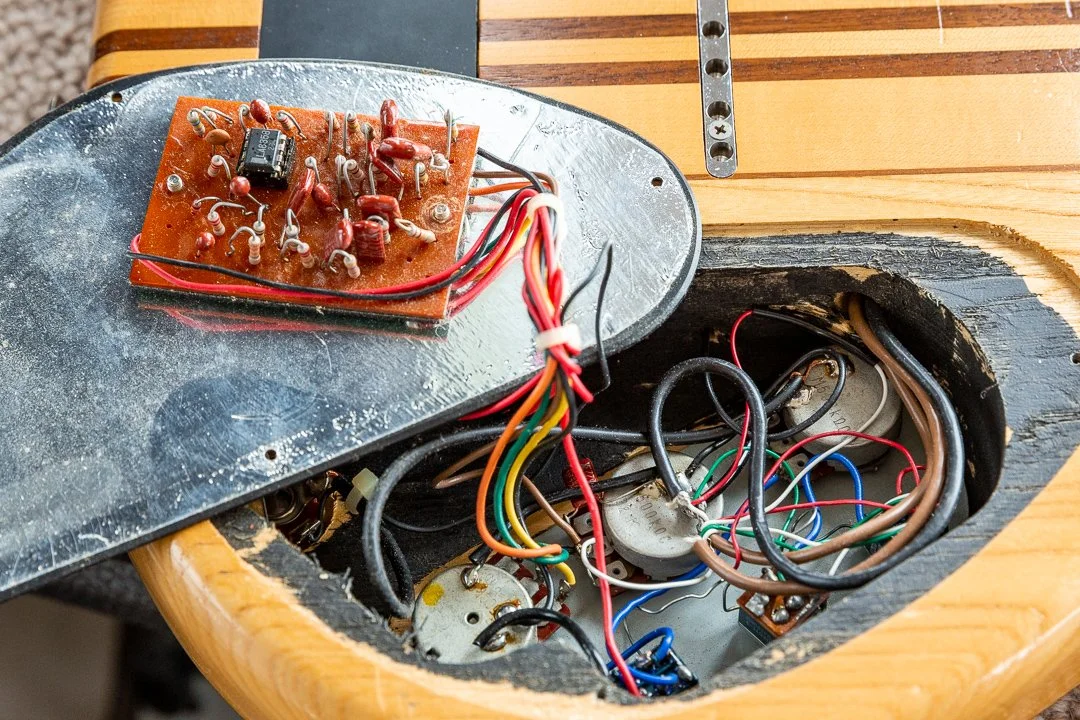
PCB and spaghetti wiring. Also note the shielding paint applied, the ground plate, the full-size pots, and the shielding on the underside of the cover, all done to reduce noise and interference. Thoughtful stuff.
All this must have been very laborious in a factory environment where these things need to be cranked out in their thousands, but they stuck to their vision and produced an incredibly versatile and forward-thinking instrument, the brass hardware just bringing a premium tactile edge to the playing. Everything feels solid and high-quality.
Even the nut was solid brass, if you’re a tech you’ll know it’s a very hard (and time-consuming) material to shape and also a lot more expensive than a regular bone blank (or plastic) but they came as standard. This particular one has been converted to right handed use so the slots are a bit wider than optimum, but that’s all part of the 40+ year story.
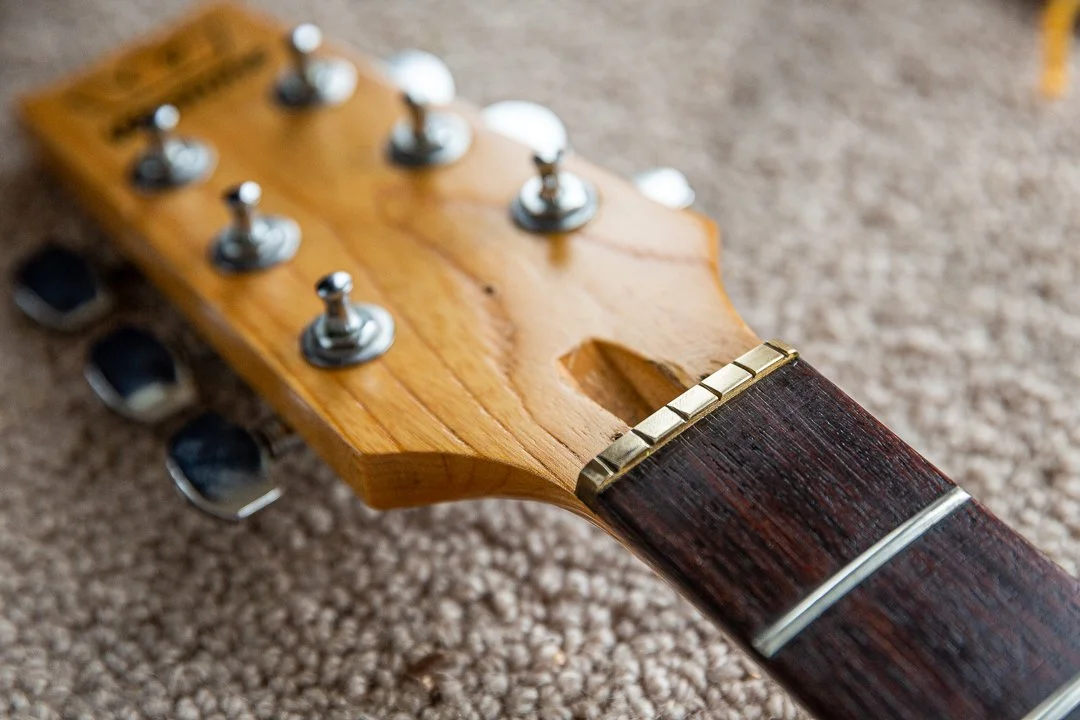
Solid brass nut
Pickups
These came with the MMK45 model. I’ve heard it said that MMK means MatsuMoKu, and also another theory that is Maxon for Matsumoku, and the prevailing idea now seems to be that it stood for Matsu Moku Kogyo. Maxon you’ll know as the Japanese electronics manufacturer (they made the TS for Ibanez back in the day) but they made some very sought after pickups for other major MIJ brands like Greco and Ibanez. Either way, these are the MMK45 model. Other MMK models are the 51, 63, and 75. There doesn’t seem to be much rhyme or reason as to why these numbers were selected.
The general specs seem to be:
MMK45 - 11.8K coils with ceramic magnets
MMK53 - 11.8K coils with alnico magnets
MMK61 - 8.4K coils with Alnico ?? magnets
MMK75 - 8.4K coils with Alnico ?? magnets
Matsumoku renamed the same pickups for their other guitar brands thusly:
MMK45 - Smooth Crash, Protomatic 4 and 5
MMK53 - Protomatic 3
MMK61 - Possibly AL-5 or AL-7 (inconclusive)
MMK75 - Classic Powers
MMK75 with chrome or gold covers - Classic Power 2
I’ve heard it said that the MMK45 was based on the DiMarzio Super Distortion. I doubt this to be true given they have a different magnet, amount of winds, and polepieces, differing in almost every measurable way. The only similarity is the brass baseplate and the fact that yes, they do both use a ceramic magnet but the SD famously uses a double thickness magnet, the same one I use in some of my pickup models, whereas the MMK45 uses a blocky skinny thing with a steel plate attached to one side to make up the total width. The neck pickup is a wonderful thing, the bridge is a little spiky for my tastes but they’re incredibly versatile and usable for any genre, especially with all the on-board switching options. I’ve played songs from funk to metal to jazz and back again with these in the same session.
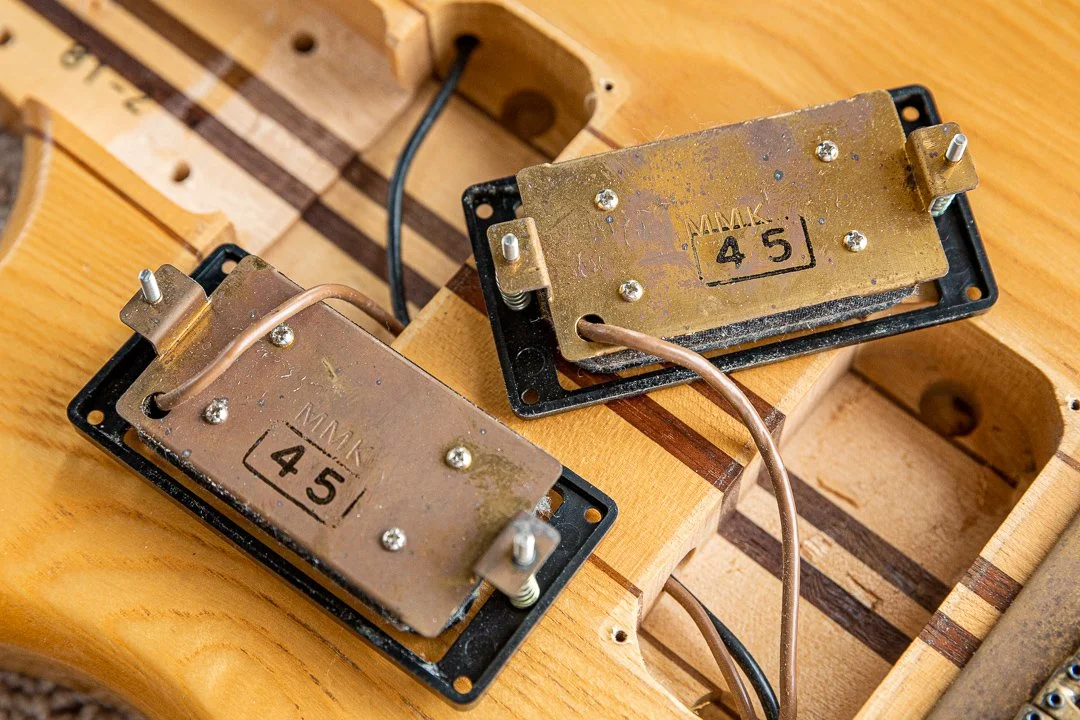
I changed the magnets in mine to an Alnico 5 (bridge) and Alnico 2 (neck).
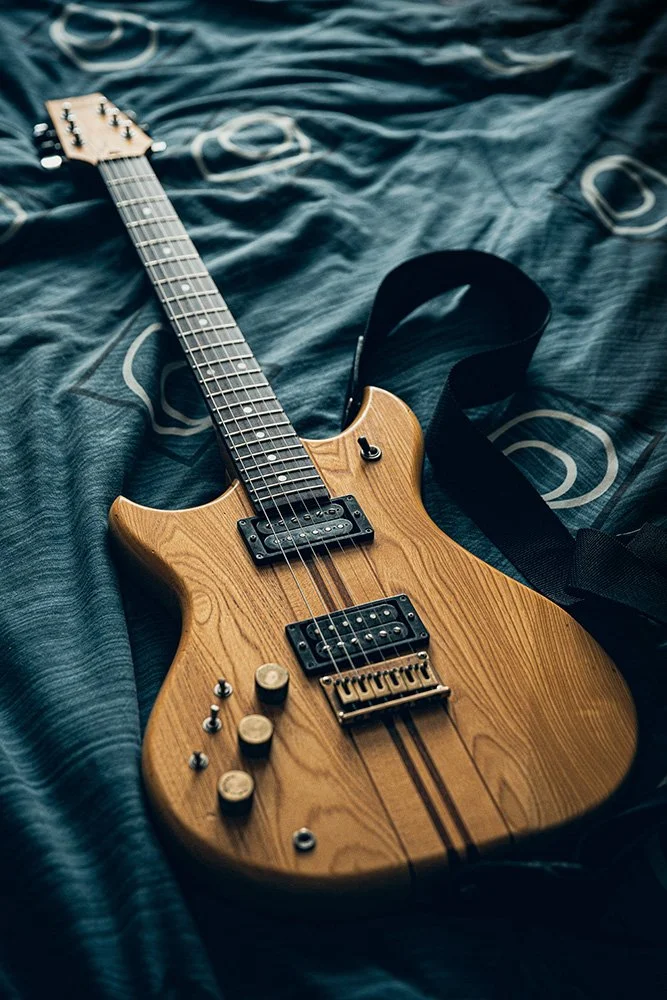
A note on the hardware
It’s brass. As such it can develop a cloudy patina. It’s easy to remove and restore the hardware to its shiny glory but unless you take steps it will inevitably cloud over again. What I did was remove all the hardware from the guitar, sand off all the surface patina using 0000 steel wool, then polish with Autosol before finally clearcoating with a spray gloss clear. This stops air getting to the metal surface and oxidizing it.
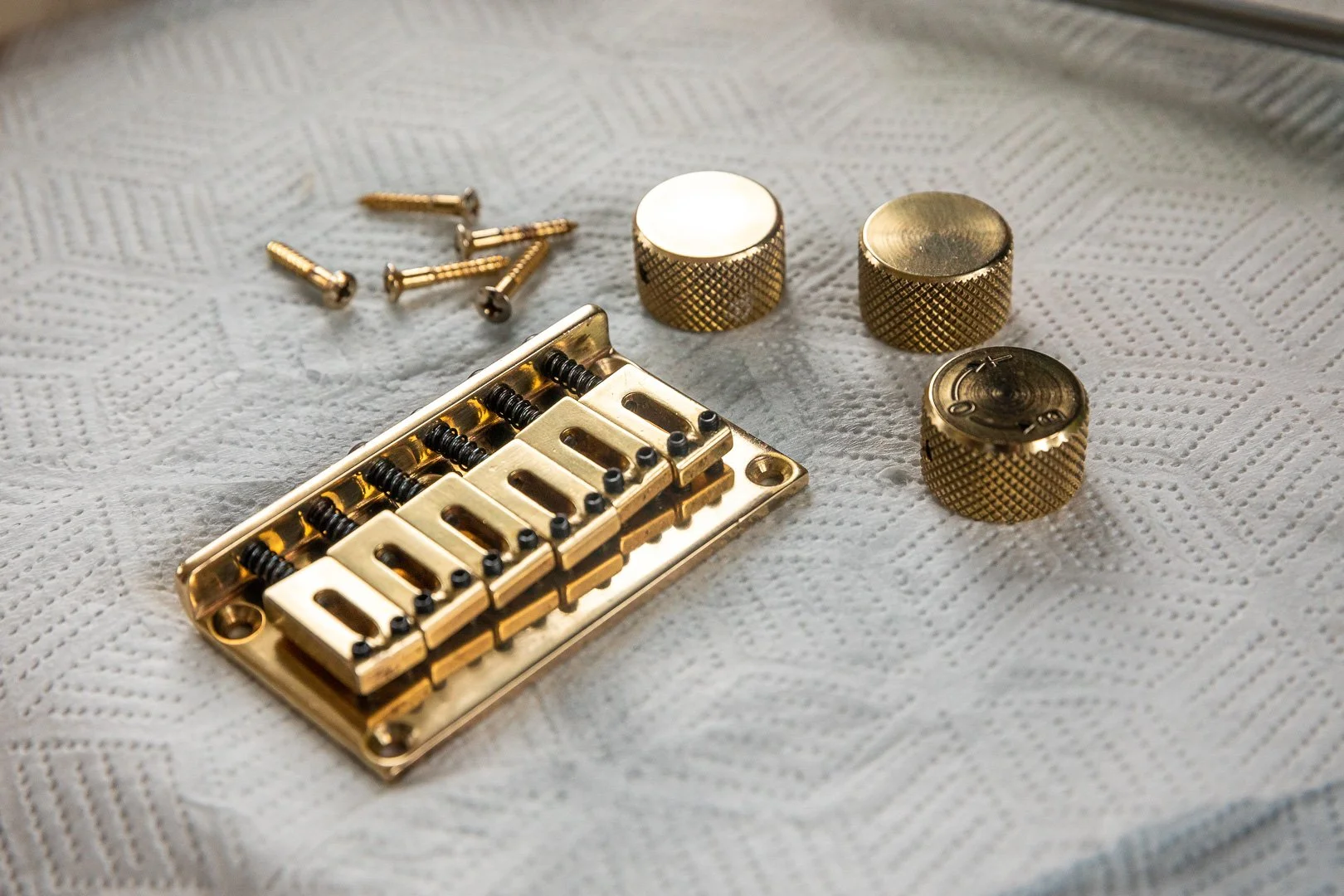
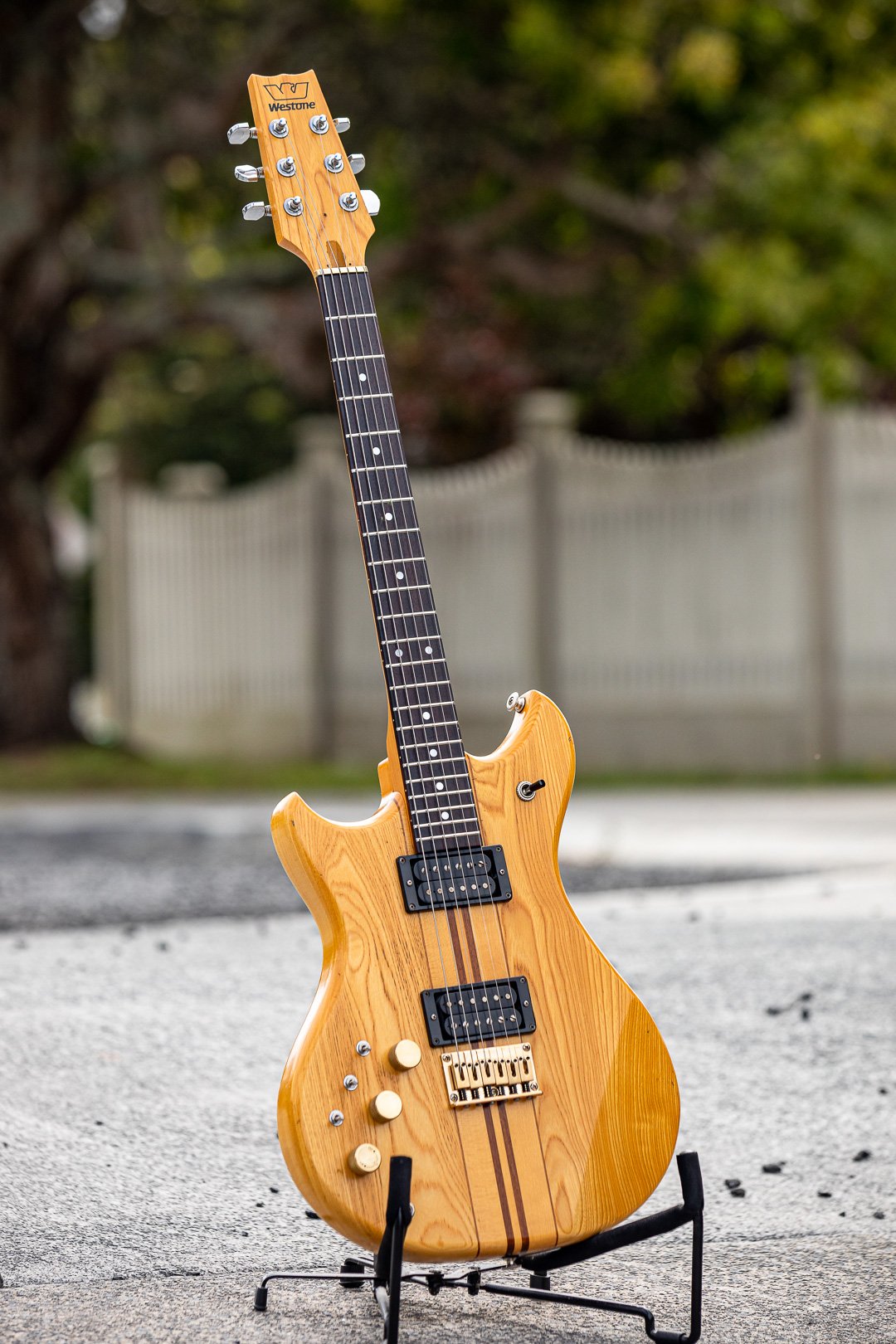
Still beautiful in December 2025
And there we have it. Part of the inspiration for this is posterity - I don’t want this brand to be forgotten or the contributions of Matsumoku to be overlooked, they were providing good guitars at a good price for musicians around the world with a player-first / profit-second mentality I greatly respect. Filled to the brim with pretty aesthetic touches like the bespoke switch tip, pretty woods, layered construction, coupled with actually useful features like the controls and decent strap buttons that you don’t have to replace on day 1, all made to an exemplary standard.
Westones, give them some love.