
What ‘Pickup Output’ Actually Changes (My Observations From Building Them)
Understanding guitar pickup output beyond DC resistance
“Output” is one of the most misunderstood concepts in guitar pickup design, but one of the most marketed.
It’s often reduced to a single number - DC resistance - and treated as if it explains everything about tone, power, and character. In practice, what I’ve found from building and winding custom guitar pickups is that output is less about sheer volume, and more about how a pickup behaves once it’s interacting with your amp, strings, guitar electronics, and your own unique playing style.
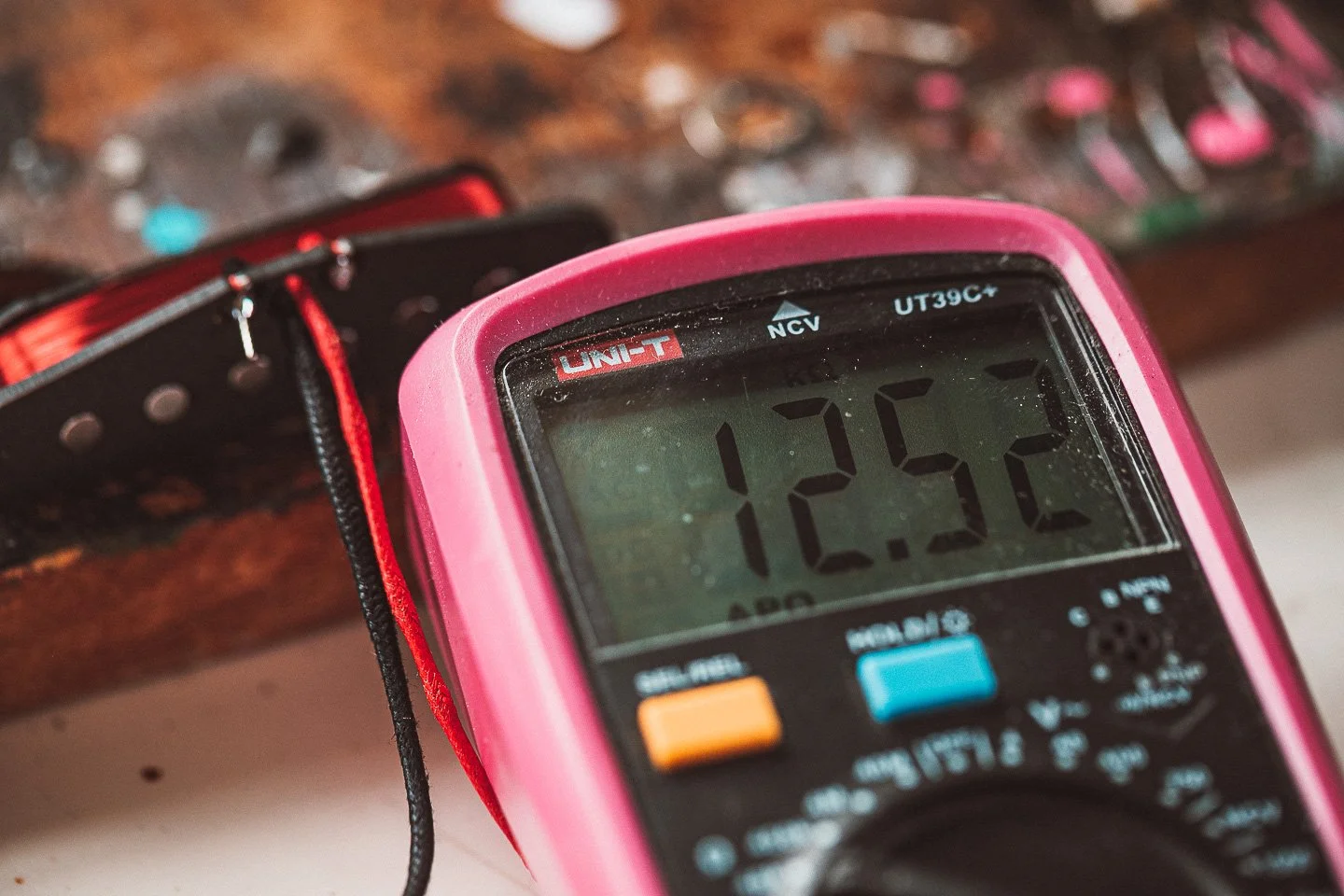
That difference matters more than most players realise and while DCR is great for marketing copy, it’s not telling the whole story when in fact it’s only telling us how much wire is wrapped around a bobbin (the longer the wire on the coil, the more it resists the flow of electricity, so therefore it has more resistance… and since it’s resisting Direct Current (DC), we have Direct Current Resistance, or DCR)
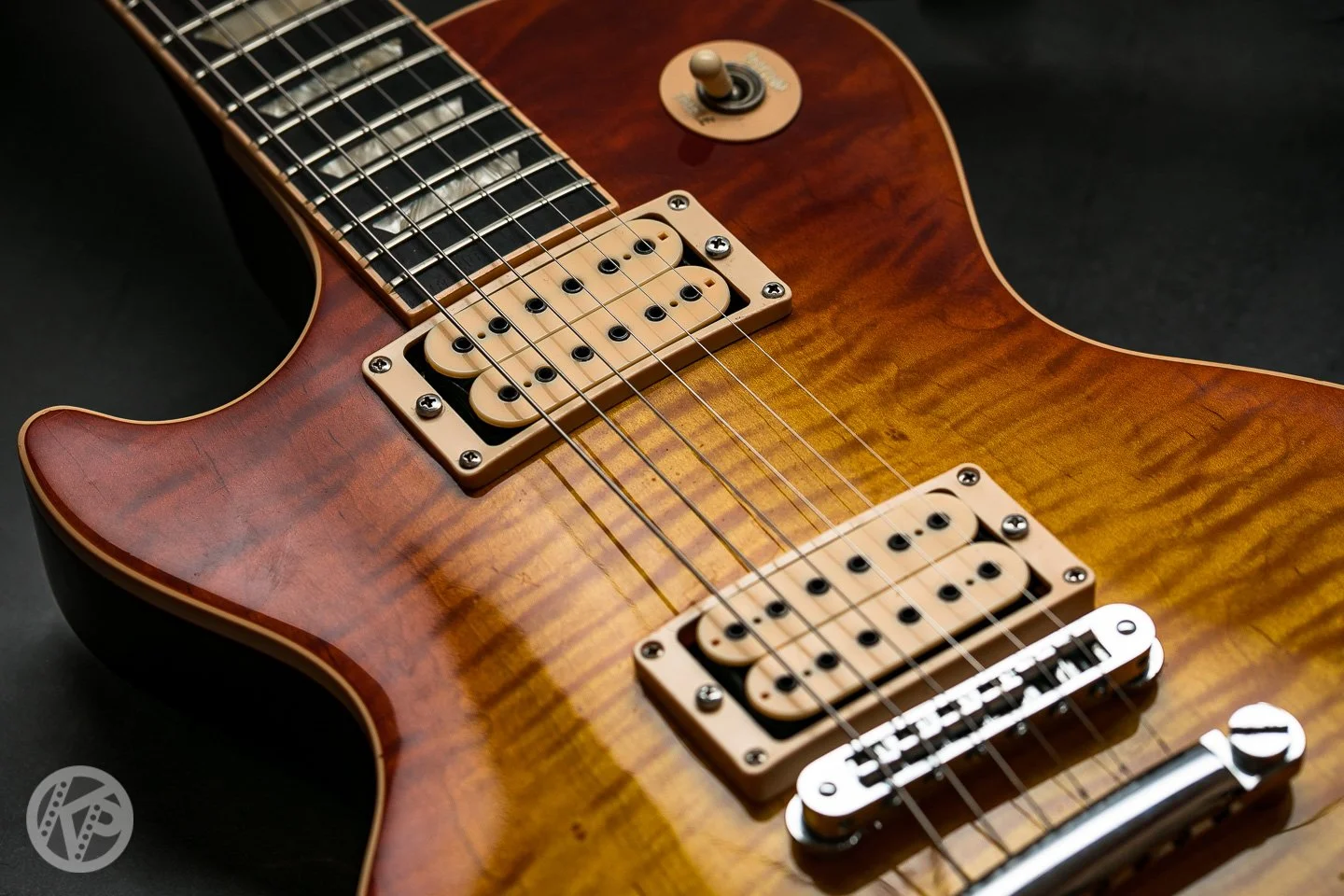
Does higher pickup output mean louder tone?
Not in any simple or meaningful way.
A higher-output pickup does tend to push an amplifier harder, but what changes just as much - if not more - is the feel and response of the instrument.
As pickup output increases:
DC resistance increases
inductance increases
resonant behaviour shifts
high-frequency response changes
compression increases
Inductance is a key factor here, even though it’s rarely discussed outside of design circles as it gets very nerdy very fast and isn’t a sexy thing to bring up at marketing meetings, it plays a major role in how the pickup actually “sounds” in a circuit.
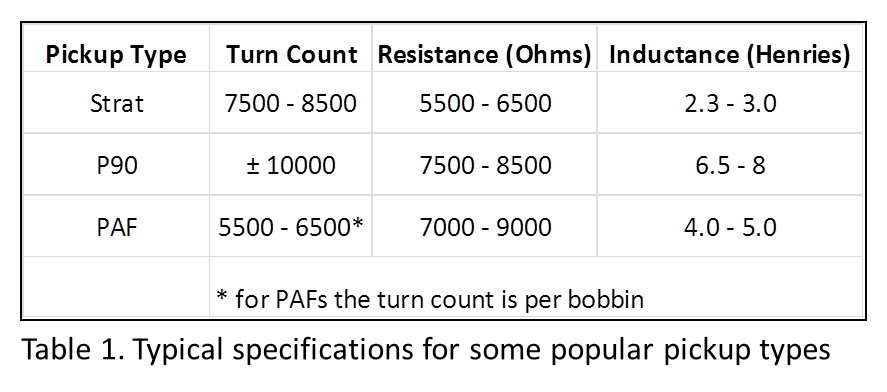
Thanks to Mr Lawling for this image
How pickup inductance affects tone and resonance
Inductance affects tone by determining where a pickup’s resonant peak sits and how wide that resonant peak is.
More inductance (usually from more windings but can also come from baseplate material, polepiece mass and material, the spacers underneath the bobbin etc) shifts the resonant peak lower, reduces high-end extension, and narrows the frequency response - which makes the pickup sound more focused, compressed, and upper-mid forward, which we hear as a “snarl” or growl, but can also make a pickup sound a bit nasal. Less inductance does the opposite, giving a wider, more open, and more dynamic sound due to less compression.
How higher output pickups feel under the fingers
From a builder’s perspective, the most noticeable difference between mid-output and high-output pickups is not just tone - it’s interaction and how they play.
Mid-output pickups tend to:
respond more dynamically to picking - that is, volume and levels of drive can be modulated by picking harder/softer
clean up more effectively with volume control - retain more harmonics and respond better to nuance
retain clearer string separation under gain - more harmonic information
feel more open and less compressed - ‘open’ is a broader, more malleable mid range.
High-output pickups tend to:
drive the amp earlier and harder which is bad for a clean tone, but great for pushing the amp into overdrive
compress transient attack so notes ring the same if hit hard or soft
smooth out playing inconsistencies
feel immediate and focused
Neither approach is inherently better. They simply serve different playing styles and musical roles. If you’re in a djent band or a band like Fear Factory and want ultra-tight, ultra-precise chugs and perhaps aren’t too concerned with switching to a clean warm tone for jazzy chords or sprinkling in some soulful Slash leads, then a high output pickup will be just the thing. Nothing is better than any other, it’s only personal preference.
Why Pickup Output Should Not Be the Starting Point
In Kingdom Pickups custom pickup design, output is typically not the goal.
We don’t start by deciding “this will be a 15k pickup” and treat that number as a measure of success or failure. Instead, we design for tone, response, and feel - and the output is what naturally results from those choices.
There’s a whole set of variables that shape how a pickup behaves, and DC resistance is only one small part of that picture.
It’s a bit like baking a cake - wire count is one ingredient, but it doesn’t define the end result on its own.
The real design decisions happen earlier
Before output is ever considered, the important decisions are already being made:
magnet type and strength
coil geometry and balance between coils
wire gauge
winding tension and consistency
winding strategy (how the coil is actually built)
intended tonal role of the pickup
how the player wants it to respond under the fingers
Fast and tight. Open and airy. Controlled and compressed. Somewhere in between.
These choices define the behaviour of the pickup long before a meter ever tells you a resistance reading.
Choosing Guitar Pickups Based on Feel, Not Specs
A common assumption players run into is that higher output automatically means a better pickup for heavier styles.
In reality, once you get past a certain point - around the mid-to-high output range (over say 15K DCR and/or 8h) - you start to see/hear diminishing returns. Instead of adding useful musical information, you’re often just reshaping what’s already there and limiting the bandwidth of sonic information. The low end can feel tighter, but dynamics and nuance tend to reduce as compression increases.
Yes, you might end up with a higher DC resistance number on paper, but that doesn’t necessarily translate to a more expressive or more usable tone.
What often changes instead is the way the pickup feels:
less dynamic range
more compression
a narrower tonal window
a different interaction with the amp
For some players, that’s exactly the point. That focused, compressed response works well for certain styles and setups. For others, it can feel like something has been taken away rather than added.
This is why understanding how output actually behaves in a circuit is more useful than chasing specifications alone.
And part of that means knowing what the numbers actually represent: DC resistance is measured in ohms (Ω), while inductance is measured in henries (H). They describe different parts of the system - and inductance, in particular, is often closer to what you’re actually hearing.
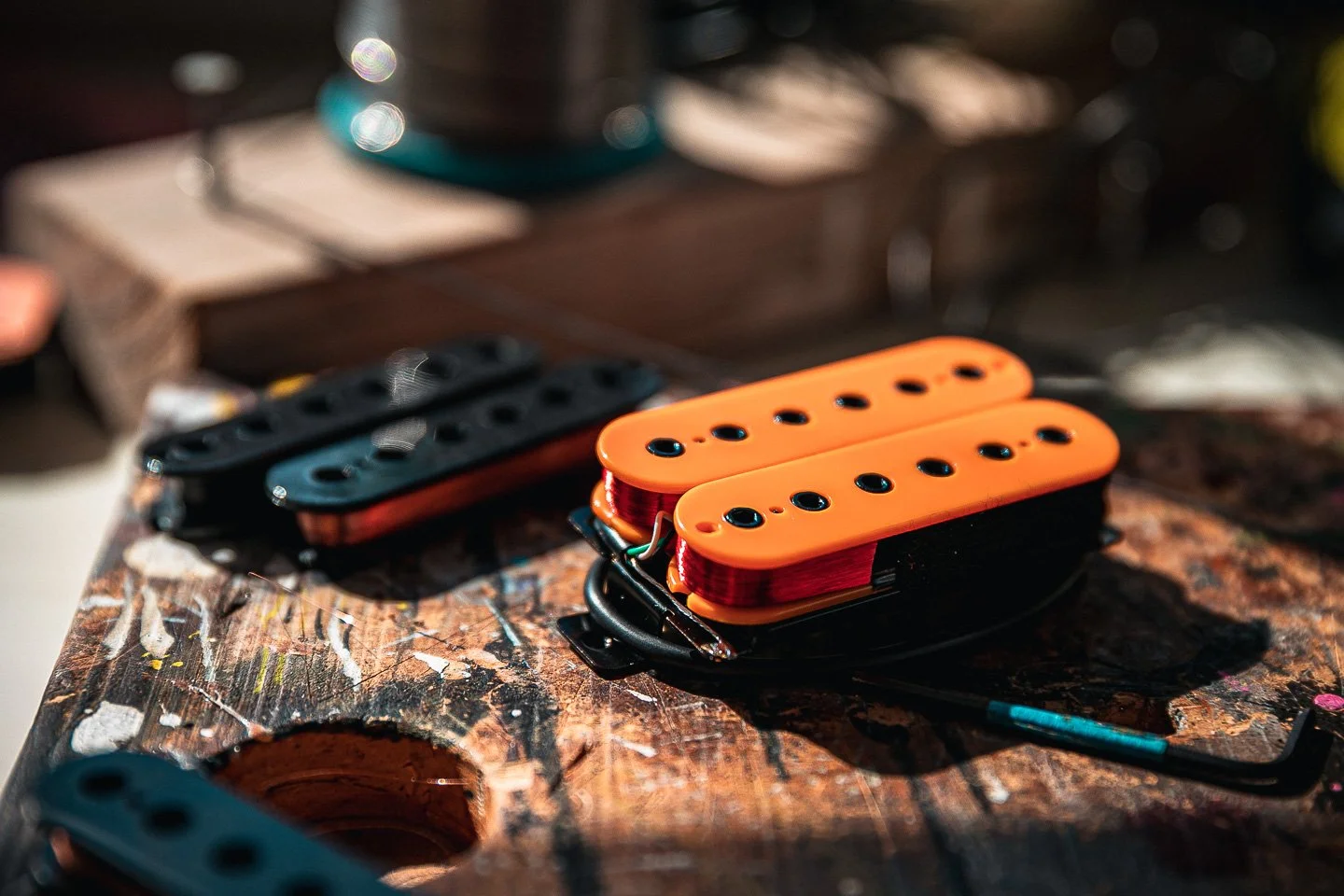
Campbell’s Pumpkin
Final thoughts on guitar pickup output
Output absolutely matters - but mostly in how it shapes behaviour, not just loudness.
A well-designed pickup is not defined by how hot it is, but by how it responds in the hands of the player.
And if a pickup only feels “better” because it is louder, it’s usually worth asking what has changed in the way it interacts with everything else in the signal chain.